Unwell Women by Elinor Cleghorn
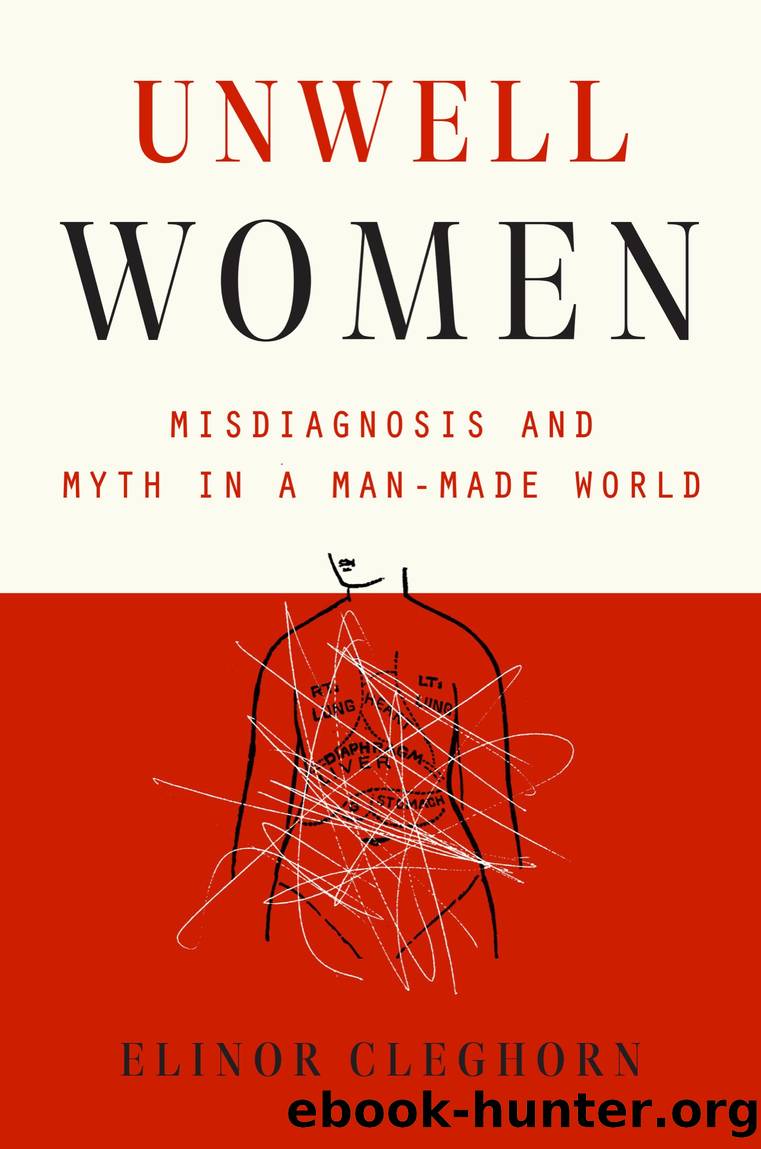
Author:Elinor Cleghorn [Cleghorn, Elinor]
Language: eng
Format: epub
Publisher: Penguin Publishing Group
Published: 2021-06-08T00:00:00+00:00
13
DUTIFUL AND DISCIPLINED
In 1933, in a small terraced house in County Durham, a thirty-two-year-old woman had just given birth to her seventh child. Like most of the women her age who lived on her street, she was married to a coal miner. The colliery owners provided accommodation for workers and their families, in houses just like hers, in mining towns and pit villages across the north of England. Thankfully, her husband had kept his job in the mine after the recession, but the little housekeeping money had to stretch. She now had nine mouths to feed. Every day at 4:00 a.m., she rose while her family slumbered to weave mats, which she swapped with her neighbors for clothes. Then there was bread to bake, a vegetable garden to tend, and coals to haul from the outhouse. Until 10:00 p.m., sometimes even midnight, she cooked, cleaned, and cared. Her husband was kind, considerate, and devoted to her, but he had to work. She did everything she could to make sure her children were well fed, and healthy.
Her own health, however, had been deteriorating for years. Her shoulders ached from nerve inflammation. Her kidneys were damaged by the Brightâs disease she suffered as a child, causing constant headaches, nausea, and digestive troubles. On the advice of the colliery doctor, she had had her teeth pulled to cure her gum disease. Since her last pregnancy, she had recurring cystitis, and her lower-right abdomen throbbed continuously. The doctor had prescribed medicine for âovarian trouble,â and she prayed this would work so that she wouldnât have to go to the hospital for surgery. Who would look after the children? When the local âhealth visitor,â a midwife who attended nursing mothers, babies, and children under five, came to check on her, she was amazed at her âindomitable pluck.â Although the woman had been âdelicate all her life,â she was âextremely careful to preserve . . . whatever strength and health remains for her.â
This woman, and many like her, was one of 1,250 participants in a study led by the Womenâs Health Enquiry Committee (WHEC) into âthe incidence and nature of general ill-health among working-class women.â Made up of eleven nonpolitical representatives of womenâs organizations across England and Wales, the committee wanted to reveal the hidden truth about the illnesses, diseases, disabilities, and life circumstances of working-class women across the country. âThe woman only comes onto the map of public conscience,â declared WHEC member Margery Spring Rice, âwhen she is performing the bodily function of producing a child.â Outside reproduction, women like the thirty-two-year-old from Durham escaped medical âvigilanceâ; the pain and suffering they bore every day, as they struggled to make ends meet, slipped unnoticed into the cracks of ignorance and inequality.
Throughout the 1920s, womenâs bodies became the focus of public and governmental attention for the most tragic reason. One in 250 âlive birthsâ resulted in a motherâs death. In 1932, a committee appointed by the Ministry of Health (MOH) to examine maternal mortality and morbidity published its final report.
Download
This site does not store any files on its server. We only index and link to content provided by other sites. Please contact the content providers to delete copyright contents if any and email us, we'll remove relevant links or contents immediately.
The Art of Coaching by Elena Aguilar(53418)
Thinking, Fast and Slow by Kahneman Daniel(12416)
The Art of Thinking Clearly by Rolf Dobelli(10598)
The 5 Love Languages: The Secret to Love That Lasts by Gary Chapman(9899)
Mindhunter: Inside the FBI's Elite Serial Crime Unit by John E. Douglas & Mark Olshaker(9420)
When Breath Becomes Air by Paul Kalanithi(8508)
Periodization Training for Sports by Tudor Bompa(8332)
Becoming Supernatural by Dr. Joe Dispenza(8277)
Turbulence by E. J. Noyes(8113)
Bodyweight Strength Training by Jay Cardiello(7969)
Nudge - Improving Decisions about Health, Wealth, and Happiness by Thaler Sunstein(7758)
Therapeutic Modalities for Musculoskeletal Injuries, 4E by Craig R. Denegar & Ethan Saliba & Susan Saliba(7744)
The Road Less Traveled by M. Scott Peck(7662)
Mastermind: How to Think Like Sherlock Holmes by Maria Konnikova(7430)
Enlightenment Now: The Case for Reason, Science, Humanism, and Progress by Steven Pinker(7354)
Win Bigly by Scott Adams(7256)
Kaplan MCAT General Chemistry Review by Kaplan(6989)
Why We Sleep: Unlocking the Power of Sleep and Dreams by Matthew Walker(6783)
The Way of Zen by Alan W. Watts(6670)
